

Increased Risk of Falls Due to Potentially Inappropriate Medication (PIM)? What the Data from the POLAR Project Show – Part 1
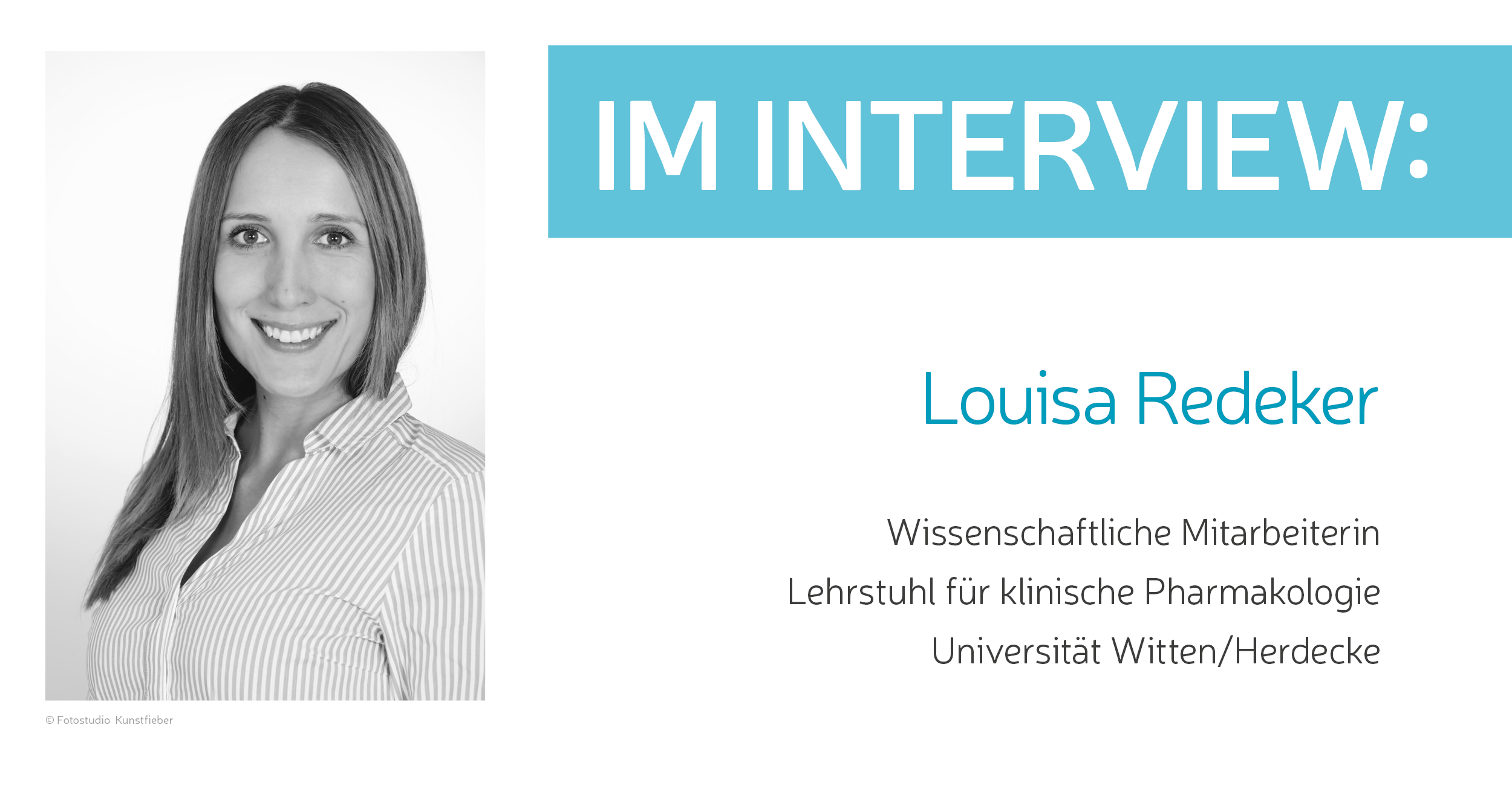
A conversation with research associate Louisa Redeker
Medications are among the most common therapeutic interventions in patient care. At the same time, adverse drug events can lead to complications—in the worst case even to hospital readmissions. Older people are particularly affected, as they often take multiple medications simultaneously, which significantly increases the risk of drug interactions and side effects. The POLAR project, a use case of the Medical Informatics Initiative (MII), investigated the association between polypharmacy and health risks. In this two-part series, we present key findings from the POLAR studies.
In the first part, Louisa Redeker, research associate at the Department of Clinical Pharmacology at Witten/Herdecke University, discusses her subproject. She examined the relationship between potentially inappropriate medication (PIM) and the occurrence of falls in older patients. In the interview, she explains further findings and the methodological challenges the project team had to overcome.
What particularly interests you about medication safety?
Especially in older people with multiple conditions who take a variety of medications, the risk of interactions, dosing problems, and adverse effects increases. Structured medication management is therefore essential to improve patient safety and quality of care.
What I find particularly compelling is that these challenges can no longer only be observed clinically, but can now also be analyzed and better understood using data routinely generated in hospitals. Research on medication safety makes real-world care problems visible and provides the basis for developing targeted risk-reduction measures.
What exactly did you investigate in the POLAR study, and how did you proceed?
POLAR was a use case of the Medical Informatics Initiative aimed at making the data infrastructure of Data Integration Centers at university hospitals usable for concrete clinical research questions. The focus was on analyzing health risks, including those associated with polypharmacy, based on multicenter routine data.
My subproject pursued two key research questions: First, we examined how frequently potentially inappropriate medication occurs in the inpatient setting. PIMs are drugs whose benefit–risk ratio is considered critical in older patients. Second, we investigated whether PIMs are associated with an increased risk of falls.
To identify PIMs, we used two established PIM lists: the PRISCUS list, which is widely used in Germany and often integrated into clinical decision support systems (CDSS), and the European EU(7)-PIM list. Both are based on expert consensus procedures and include active substances classified as PIMs as well as therapeutic alternatives.
It is important to note that these lists are decision-support tools. Whether a medication is inappropriate in an individual case always requires a clinical benefit–risk assessment.
What challenges did you overcome in conducting your POLAR project?
A key challenge was working with multicenter routine data from different hospital information systems. Each university hospital has its own IT structures and documentation processes, meaning that data are not automatically comparable. In POLAR, we implemented a distributed analysis approach: the data remain locally within the Data Integration Centers, are analyzed there, and only aggregated results are centrally combined.
A particular difficulty was dealing with missing or inconsistent timestamps, as well as differences in the documentation of medications and diagnoses. However, such information is essential for analyzing relationships between medication and events such as falls. These challenges were gradually addressed over the course of the project through close coordination with the participating sites.
An important outcome of POLAR is therefore not only the substantive research findings but also the demonstration that cross-site analysis of routine data in Germany is fundamentally feasible.
What are the other key findings of your research project?
Based on data from ten university hospitals, we were able to make robust statements about the frequency of PIMs in the inpatient setting. More than 160,000 cases of patients aged older than 65 years were analyzed.
The prevalence varied considerably depending on the PIM list used: according to PRISCUS, at least one PIM was present in 12.8% of cases, whereas the EU(7)-PIM list identified 45.6%.
We did not find a clear association between the documentation of PIMs and the occurrence of falls. However, for medications known to increase fall risk—so-called fall-risk-increasing drugs (FRIDs)—we were able to demonstrate such an association.
Two key conclusions can be drawn: PIMs are widespread and highlight the need for regular medication reviews. At the same time, not every PIM is automatically associated with an increased risk of falls. However, certain medications that are clinically recognized as increasing fall risk do indeed show this effect.
How much progress has been made in IT-based medication safety research in recent years?
Within the POLAR project, we were able to demonstrate that multicenter analysis of routine data is technically feasible even without centrally pooling patient-level data. This represents a significant step toward IT-supported medication safety research.
At the same time, we identified areas for further development: more consistent documentation of dosage information and reliable timestamps for medication prescriptions and diagnoses are needed. These aspects are already being addressed in the ongoing development of the Data Integration Centers. Thus, insights from POLAR directly contribute to improving data quality for future analyses.
Where do you see further need for action?
The quality and standardization of routine data are continuously improving and hold great potential for both research and care, but this potential has not yet been fully realized. It is also crucial to integrate findings into Clinical Decision Support Systems (CDSS).
The long-term goal is not only retrospective analysis but also real-time, patient-centered decision support in clinical practice. I believe POLAR has laid an important foundation for this. The next step is to further expand this infrastructure and translate it more strongly into routine care.
What advice would you give to early-career researchers in your field?
Think interdisciplinarily. Research in medication safety lies at the intersection of pharmacy, medicine, informatics, and health services research. Truly impactful research emerges when different perspectives come together and researchers learn to understand each other’s disciplinary languages.
Those who are willing to adopt multiple perspectives can not only analyze complex questions more effectively but also develop practical solutions. Projects like POLAR clearly demonstrate the value of exchange—many of the advances achieved would not have been possible without close interdisciplinary collaboration.
Find more information on the results of this POLAR subproject in the following publication:
Redeker, L., Kesselmeier, M., Mussawy, B. et al. Use of Potentially Inappropriate Medication and Association with Falls During Hospitalisation: An Analysis Based on Electronic Health Records (POLAR_MI project). Drugs – Real World Outcomes (2025). https://doi.org/10.1007/s40801-025-00528-4