


About DISTANCE:PRO
Improving treatments and quality of life with digital solutions
Medical practices and regional hospitals are key institutions for healthcare delivery. These non-university settings also generate large volumes of medical data. In the Digital Hub DISTANCE, the research data structures of the Medical Informatics Initiative (MII) were extended to medical facilities in regional care in order to improve treatment quality in the long term. The follow-up project DISTANCE:PRO builds on these achievements. The goal is to establish a nationwide, cross-sector digital ecosystem that more closely links research and healthcare.

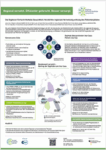
Digital Progress Hub DISTANCE:PRO
Establishment of external data integration centers as scalable, cross-site, and interoperable infrastructures for data exchange between regional healthcare institutions and research
Development of an app to improve the quality of life of oncological-surgical patients, oriented toward the needs of patients as well as regional healthcare providers
Supporting patient self-care by enabling patients to gain an overview of their physical and mental health through an app
Close collaboration with eight regional care institutions and eight additional partners from science and research, led by University Hospital RWTH Aachen
Improving quality of care through cross-sector data exchange
The core of the DISTANCE project was the Digital Hub. It provided the basis for cross-sector, interoperable data exchange between university institutions, participating primary and standard care hospitals, and general practitioners. Data from routine care were centrally collected, anonymized, and made usable nationwide. A total of eight regional healthcare providers involved in the project were connected to the Digital Hub via the so-called Hub Connect Boxes, which are operated locally at the respective sites.
In DISTANCE:PRO, the data infrastructure of the Digital Hub will be expanded and established as an External Data Integration Center (XTDIZ), similar to those previously available only in university settings. With the XTDIZ, data from regional healthcare can be consolidated, harmonized, and used in a privacy-compliant manner for digital applications, AI-based prediction models, and research. DISTANCE:PRO also relies on telemedicine and the integration of wearables to improve continuous patient care.
Digital support along the treatment pathway
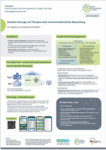
To test the data flow, structured longitudinal data from patients were recorded digitally for the first time in DISTANCE using an app during and after intensive care treatment. The PICOS App supported former intensive care patients in their everyday self-care by regularly aggregating information on their physical and mental well-being. At the same time, large volumes of data were generated to support research into new treatment and therapy options for former intensive care patients.
The app developed in DISTANCE:PRO is aimed at oncological patients who require intensive care following surgery. The follow-up project focuses on the longitudinal collection of data throughout the entire hospital stay of patients. Based on this data, critical illnesses can be better assessed in the future and the quality of care can be optimized.
In close collaboration with the six other Digital Hubs of the MII, data are to be digitally integrated and represented in a connected manner across the entire care pathway—from prevention and acute care to rehabilitation and long-term follow-up.
Patient participation for sustainable, practical solutions
Another key aspect is the active involvement of patients and other stakeholders to ensure that the solutions developed are practical, user-friendly, and sustainable. With this approach, DISTANCE:PRO aims to create a professional, market-ready application that contributes in the long term to the digital transformation of healthcare, improves clinical outcomes, and makes patient care more efficient.
DISTANCE:PRO is funded by the Federal Ministry of Research, Technology and Space from October 1, 2025, to December 31, 2027.
more details
About the Digital Progress Hubs Health
Since 2021, the Digital Progress Hubs Health (DigiHubs) have been bringing the work of the Medical Informatics Initiative (MII) to connect research and healthcare into all areas of the healthcare system. Each hub is based at the Data Integration Center of a university hospital. A Data Integration Center networks with regional partners — including hospitals, medical practices, rehabilitation and nursing facilities, and emergency services. In the first funding phase until 2025, the foundations for cross-sector data exchange were established. Since mid-2025, the seven DigiHubs have intensified their collaboration to expand the structures established previously and create a nationwide network.
Medical Informatics Initiative (MII)