

A Look into the Data Integration Centers: Implementing Medical Research Projects in a Low-Threshold and Secure Way with the Aachen Data Integration Center
In the SMITH news series “A Look into the Data Integration Centers”, the Data Integration Centers established within the SMITH Consortium of the German Medical Informatics Initiative (MII) are introduced. Originally established at university medical sites, the Data Integration Centers enable secure and data protection-compliant access to high-quality data from routine clinical care. In the final installment of our series, the Data Integration Center team at University Hospital RWTH Aachen (UKA) presents how its internal workflows are organized, which projects are currently being advanced, and what brings the team together at the end of the week.
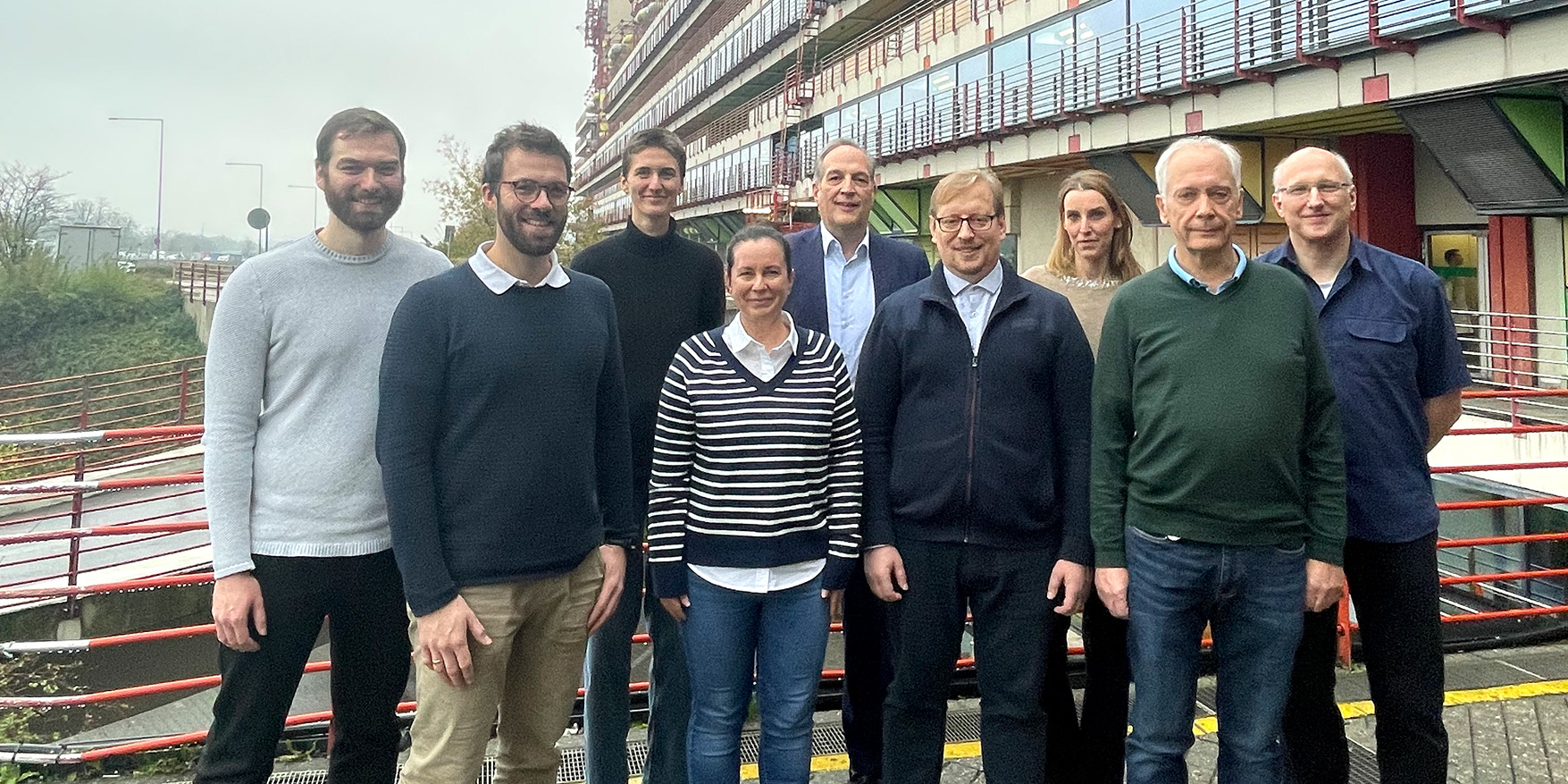
What roles do the staff members at the Aachen Data Integration Center have?
The Aachen Data Integration Center team works in the following areas: project management, data management, transfer office, system administration, and IT infrastructure.
How is the Aachen Data Integration Center structured?
The Aachen Data Integration Center is assigned to the IT division of University Hospital RWTH Aachen and integrated into the unit for Research IT Systems and Data Analytics. Together with the Institute of Medical Informatics, the Legal Affairs Department, the Staff Unit for Risk and Information Governance, and the Dean’s Office of the Faculty of Medicine, we continuously work on optimizing data use processes. These processes relate both to projects submitted via the German Portal for Medical Research Data (FDPG) and to internal studies and scientific work. In particular, requirements related to data protection and information security are implemented in cooperation with the responsible organizational units.
What services do you offer to researchers?
As a Data Integration Center team, we support researchers at University Hospital RWTH Aachen in the secondary use of health data by
- supporting the planning of research projects: we assess data availability and determine case numbers through preliminary analyses—both for local projects and for requests submitted via the FDPG.
- providing patient data from routine clinical care at University Hospital RWTH Aachen in a data protection-compliant and quality-assured manner for these projects and requests.
- advising on the conception and design of information systems for research projects, which increasingly include components of artificial intelligence.
What are you currently working on?
Currently we are working on integrating oncological data sources so that we can include the MII core data set extension module Oncology in our portfolio. This module comprises data on the diagnosis, treatment, and follow-up care of cancer patients. It also includes information on cancer-specific classifications (TNM), staging, and treatment recommendations from tumor boards.
Through our Center for Personalized Medicine (ZPM) at University Hospital RWTH Aachen, we are also able to work in parallel on integrating the Molecular Tumor Board module.
What are your goals for the future?
With the Aachen Data Integration Center, our goal is to make routine care data as easily accessible for research as possible. To this end, we regularly review and further develop internal processes. We maintain close exchange with researchers as well as experts in data protection management, law, and medical informatics. A key objective is the harmonization, digitalization, and automation of workflows—for example in the application process and quality assurance—in order to make data provision more efficient and user-friendly.
A fun fact about the Aachen Data Integration Center:
Currywurst on Fridays! This cult classic gives us enough energy and motivation on the final stretch of the week to tackle the remaining tasks.
Since 2018, the university medical sites of the Medical Informatics Initiative have been setting up Data Integration Centers funded by the GermanFederal Ministry of Research, Technology, and Space (BMFTR).In 2023, the Data Integration Centers of the university hospitals were integrated into the Network of University Medicine. Since then, they have been funded by the BMFTR as part of the NUM, but continue to be managed by the MII.