
Data Integration Centers: Advancing and Shaping Medical Research in Germany
DIZ Workshop on October 12–13, 2026, in Leipzig
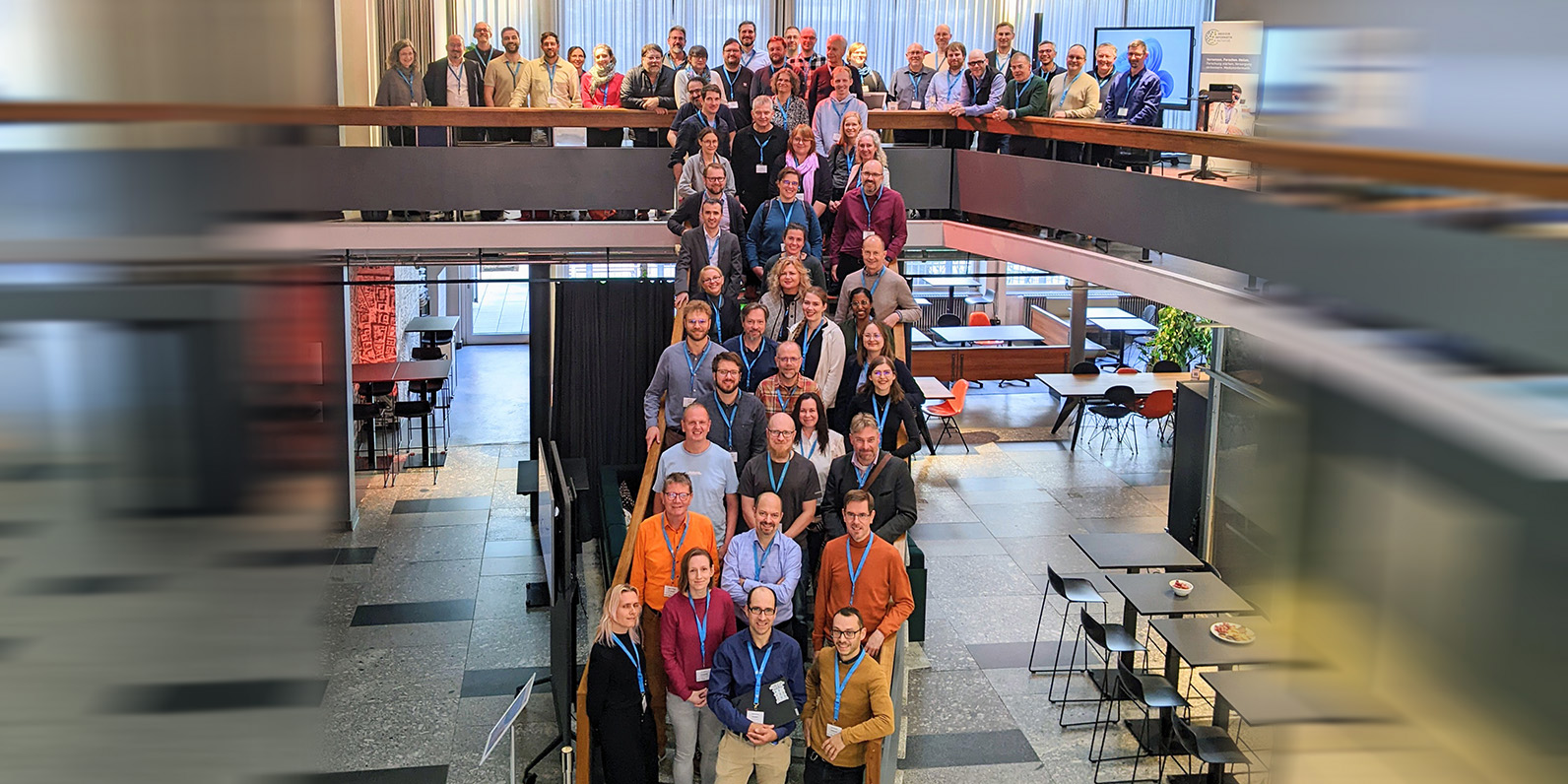
About 70 staff members and directors of the Data Integration Centers gathered last week for two days at the Design Offices in the “Alte Post” in Leipzig. The Data Integration Centers, originally established at university medical centers, enable secure, data-protection-compliant access to high-quality data from routine patient care.
Under the motto “From Further Development to Co-Creation,” the Data Integration Center workshop focused on cross-site exchange, shared challenges, and the further development of collaboration. The goal was to share experiences, bring together different perspectives, and further strengthen the role of the Data Integration Centers in the German research landscape.
Ten Years of the Medical Informatics Initiative: Much Achieved Together
To kick things off, participants looked back on the previous Data Integration Center Workshop in 2025. In three working groups moderated by Prof. Dr. Martin Boeker (Technical University of Munich), Dr. Danny Ammon (Jena University Hospital), Prof. Dr. Thomas Ganslandt (FAU Erlangen-Nuremberg), and Dr. Philip Overton (TMF e. V.), they addressed the topics of sustainability, technical infrastructure, and the efficient implementation of data use projects.
Following this, Prof. Dr. Hans-Ulrich Prokosch, head of the MIRACUM Consortium, provided an overview of the development of theMedical Informatics Initiative (MII) over the past ten years. What was barely imaginable at the time of its conception is now a reality: clinical data can be consolidated for research purposes both locally and across multiple sites. Instead of the collaboration among a few clinics originally envisioned, the initiative now encompasses 41 sites. Intensive cross-consortium collaboration, joint use cases, and the German Portal for Medical Research Data (FDPG) have significantly advanced this development. The MII has thus become a unique long-term project that has brought about lasting change in medical research in Germany.
Strengthening the Role of the Data Integration Centers in the Network of University Medicine
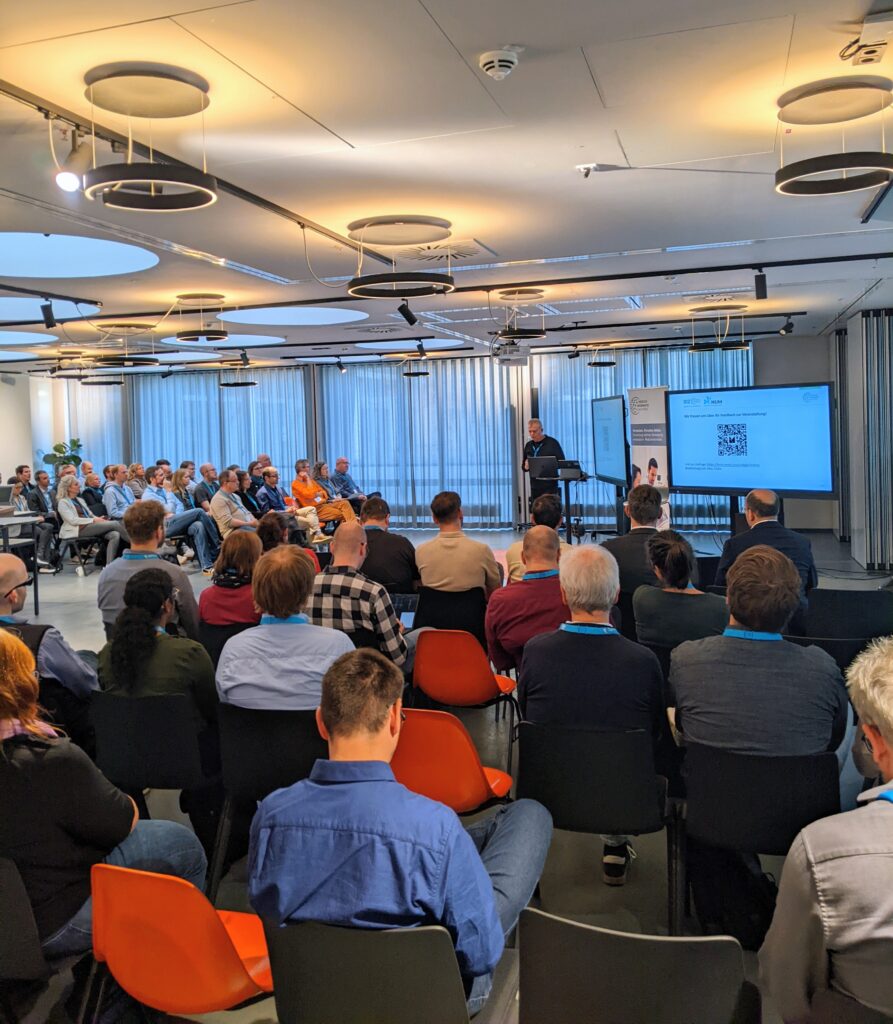
Another focus of the workshop was the question of what role the Data Integration Centers should play in the future within the Network of University Medicine (NUM). In his keynote address, Ralf Heyder, head of the NUM Coordination Office, emphasized: “The Data Integration Centers serve as ‘enablers’ for the NUM platforms.” As central infrastructures for providing routine clinical data, they can support the NUM research platforms, make data available for cross-site projects, and simplify its use for researchers. Transparency regarding data availability and quality also plays an important role in this context. In return, the NUM offers financial support to the Data Integration Centers and promotes their use.
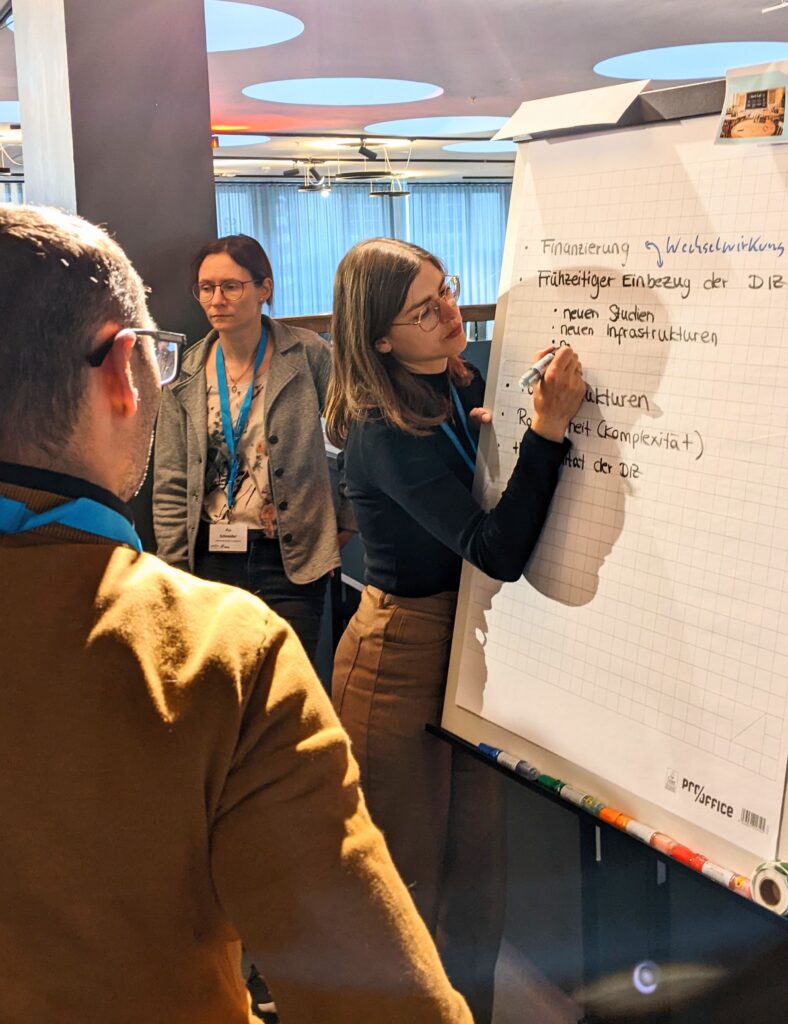
In two breakout sessions, participants then discussed specific challenges and prospects. Topics in the first breakout session, moderated by Dr. Tim Herrmann (Magdeburg University Medical Center), included technical architectures, recruitment and training of staff, collaboration with other data infrastructures, and goals for further development through 2030.
In the ensuing discussion, it became clear that differing organizational frameworks can make it difficult to find common solutions. Participants in this breakout session considered it particularly important for the Data Integration Centers to define shared core competencies that are oriented toward the users of the Data Integration Centers. In addition, they emphasized that the potential of artificial intelligence (AI) should be leveraged more fully in their work.
The second breakout session, moderated by Natalie Klötgen (Ruhr University Bochum), focused on integrating the Data Integration Centers more closely into the NUM’s overarching planning and decision-making processes. Among other things, the discussions among participants revealed that increased communication and visibility at the individual locations would strengthen the Data Integration Center’s position.
Concrete Solutions and New Applications for AI
The second day of the workshop focused on practical approaches.
Robert Krock (TMF e. V.) began by discussing potential funding for the Data Integration Centers through data use projects. In another keynote presentation, Dr. Danny Ammon highlighted opportunities for the Data Integration Centers to participate in connection with the Hospital Future Act (KHZG). He emphasized that the expertise of the Data Integration Centers is in demand for implementing interoperability initiatives and that such projects can simultaneously support the further development of its structures. Christian Erhardt (University Hospital Tübingen) then presented how REDCap, as a service offered by the Data Integration Center, can support local hospitals with data collection.
The second session focused entirely on the use of artificial intelligence (AI) at the Data Integration Centers. The keynote presentations by Georg Fette (University Hospital Würzburg), Dr. Jan Gewehr (University Medical Center Hamburg-Eppendorf), and Prof. Dr. Martin Boeker (Technical University of Munich), along with the subsequent discussion, demonstrated that AI is already being used in a variety of ways. Some examples are the structuring of free-text data such as medical histories and data requests, documentation, or anonymizing texts. At the same time, the Data Integration Centers can create important prerequisites for the use of AI by providing interoperable data for training models and supporting the use of corresponding applications in research.
The two days demonstrated how much the Data Integration Centers can achieve through exchange and the joint development of solutions. Crucial for the next steps are stronger networking, clear common goals, and the opportunity to actively shape the further development of research infrastructures.