


GeMTeX Project a Success: Over 20,000 Annotated Documents Now Available for Medical Research
GeMTeX Final Meeting in Leipzig on October 19–20, 2026
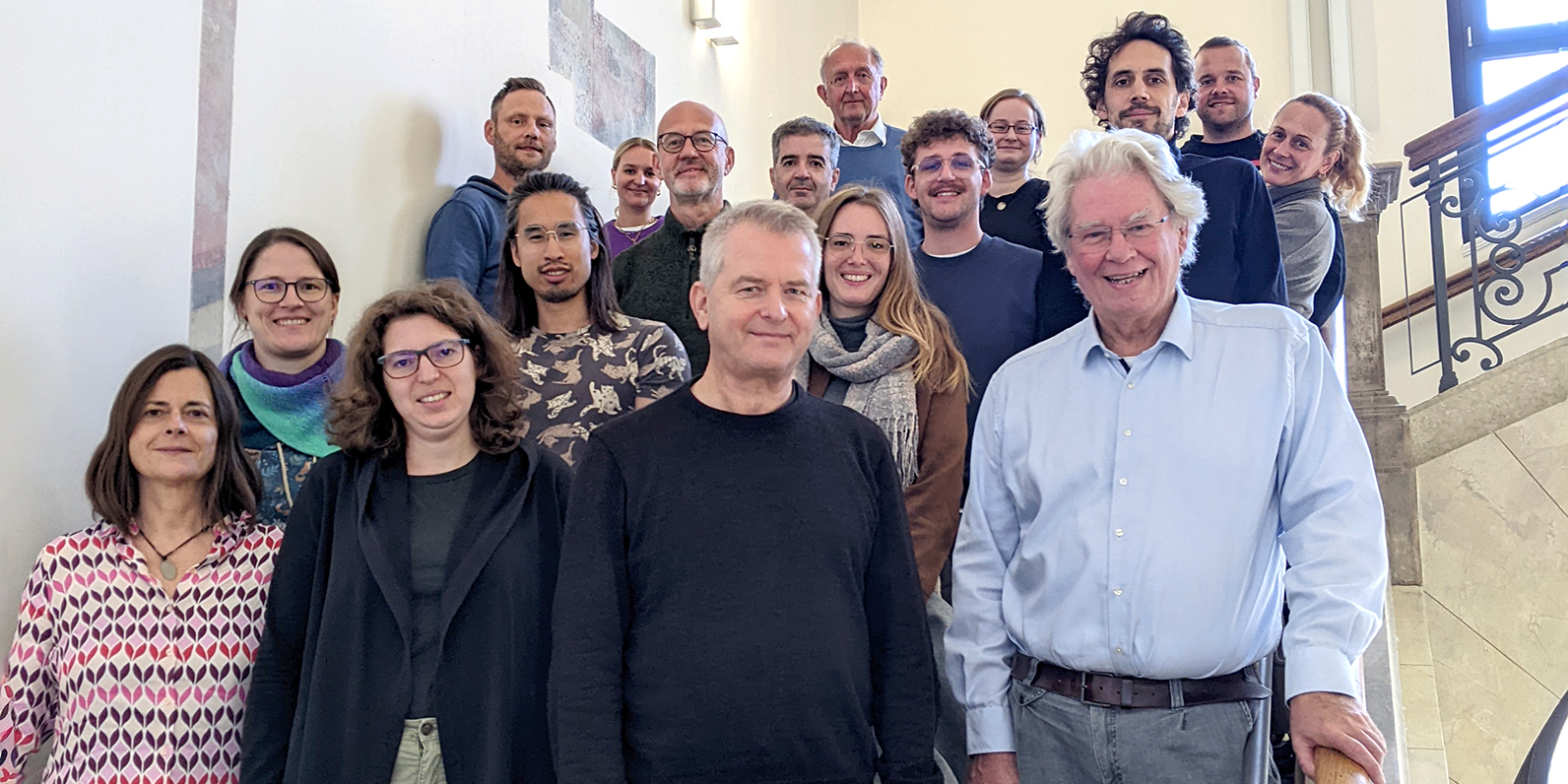
Making clinical documents from patient care usable for research in compliance with data protection regulations: The team at the MII GeMTeX Methods Platform has been working intensively toward this goal over the past three years. At the final meeting on October 19 and 20, 2026, in Leipzig, approximately 20 project team members gathered to consolidate the results, prepare scientific publications, and take stock of the project.
Scientific Results and Technical Integration
As part of the GeMTeX project, from May 2023 through the end of 2026, documents from routine clinical care were de-identified and annotated by medical students at six university medical centers. In this process, information that could identify individuals or locations was redacted, and the texts were enriched with metadata about their content to make them usable for research and artificial intelligence (AI) applications.
On the first day of the closing meeting, the focus was on the scientific publications to be released regarding the work conducted in GeMTeX.
Over the course of the project, the team further developed tools and platforms for de-identification and annotation, established technical processes for providing clinical documents, and drafted guidelines for the semantic annotation of medical texts.
In the coming weeks, the project team will compile these diverse results into scientific publications to make them accessible to the professional community.
Lessons Learned and Assessment of Three Years of Project Work
The second day was devoted to the experiences gained from the annotation work, the key lessons learned, and a summary of the project results. Despite challenges in planning, recruitment, and technical integration, the team draws a positive conclusion.
In total, over 20,000 documents containing nearly 7 million tokens were manually annotated during the project’s duration. As a result, the GeMTeX corpus has emerged as by far the largest German-language clinical text corpus available for the scientific analysis of medical texts and the development of data-driven applications.
Other key achievements include the adaptation and further development of the INCEpTION annotation platform, the development of a pipeline for de-identifying clinical documents, the first large-scale concept-based text annotation using SNOMED CT, and the integration of the project results into the core dataset of the Medical Informatics Initiative (MII). With the new “Document” core dataset module, the texts can be integrated into the Data Integration Centers (DIZ) as well as the German Portal for Medical Research Data (FDPG) to make them available for research. The partner ZB MED has linked GeMTeX to its Health Study Hub, making it easy for researchers to find the corpus along with information on how to use it.
A Foundation for Further Research
“The GeMTeX corpus is of outstanding quality by international standards,” summarized Prof. Dr. Martin Boeker, project leader of the GeMTeX project. This is primarily due to the scientifically sound approach, the high level of agreement among the annotators and the strict adherence to data protection standards. These factors ensure the long-term usability of the corpus.
Even after the project ends, the GeMTeX team will continue to share its findings with the scientific community: In addition to scientific publications, workshops are planned at specialized events such as Medical Informatics Europe (MIE) and the annual conference of the German Society for Medical Informatics, Biometrics, and Epidemiology (GMDS).
Numerous follow-up projects on clinical text corpora
With the completion of GeMTeX, research on clinical text corpora will continue within the project’s framework. Two projects were approved as part of the German Research Foundation (DFG) call for proposals “Data Corpora for Artificial Intelligence”: Starting in 2027, LIFETEX in Leipzig will make available a text corpus consisting of documents from the LIFE study on lifestyle-related diseases and link it to data from the LIFE Research Center. The Heidelberg project CARDIO++ expands the already available CARDIO:DE text corpus and advances research on AI applications in the field of cardiovascular medicine.
Also in 2027, the German Federal Ministry for Research, Technlogy and Space (BMFTR) data use project PARADE will launch in Leipzig. With the help of large language models, the project aims to detect adverse drug events and drug interactions. In addition, the Saxon network KIMed – Network for Artificial Intelligence in Medicine is supporting a natural language processing (NLP) use case designed to demonstrate how methods from GeMTeX can be applied in a secure processing environment (SPE).
Recent Publication:
Developing the German Medical Text Corpus (GeMTeX): Legal Compliance and Semantic Enrichment (Hofenbitzer et al., LREC 2026)
Access to the GeMTeX Corpus: